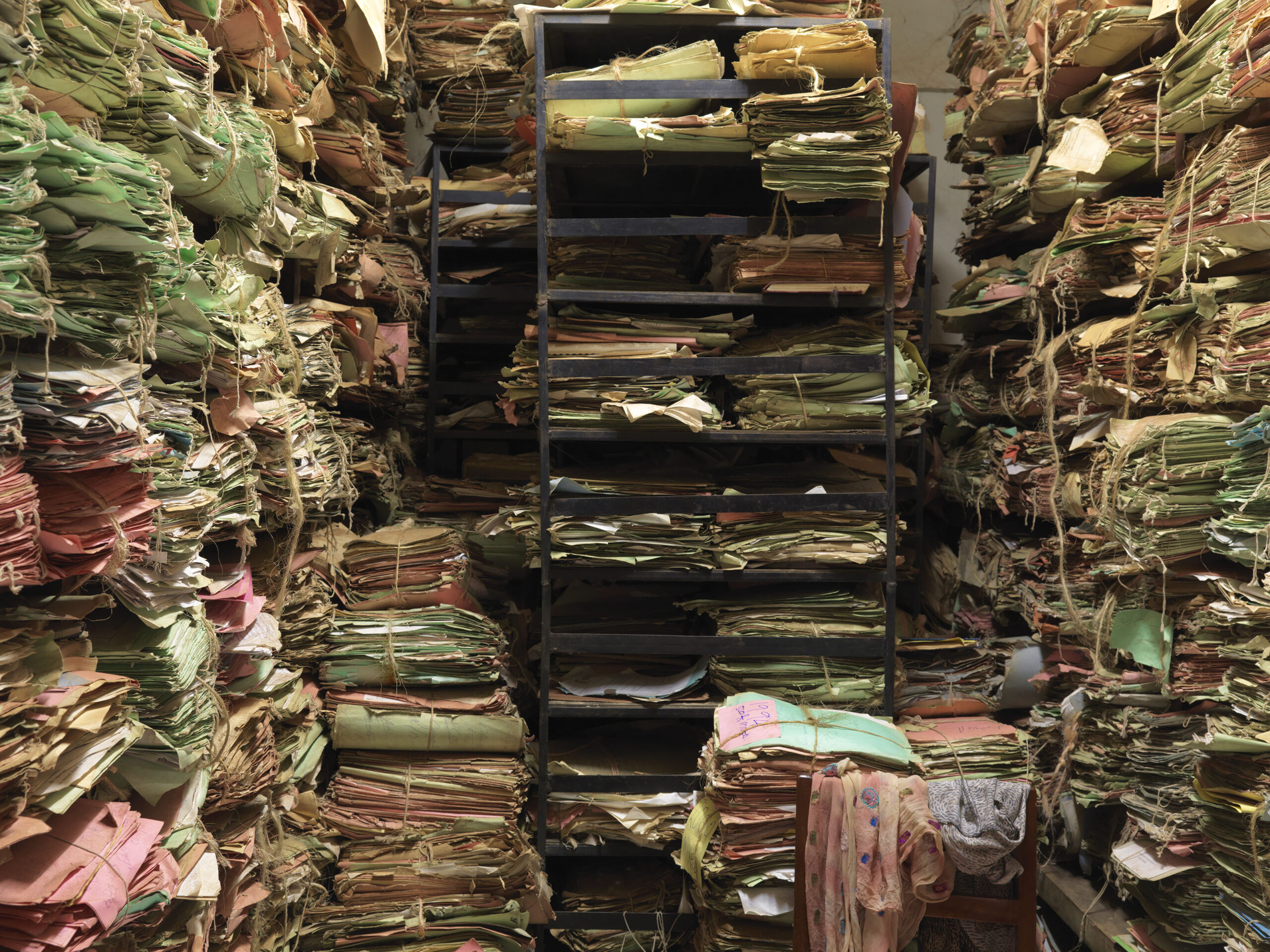
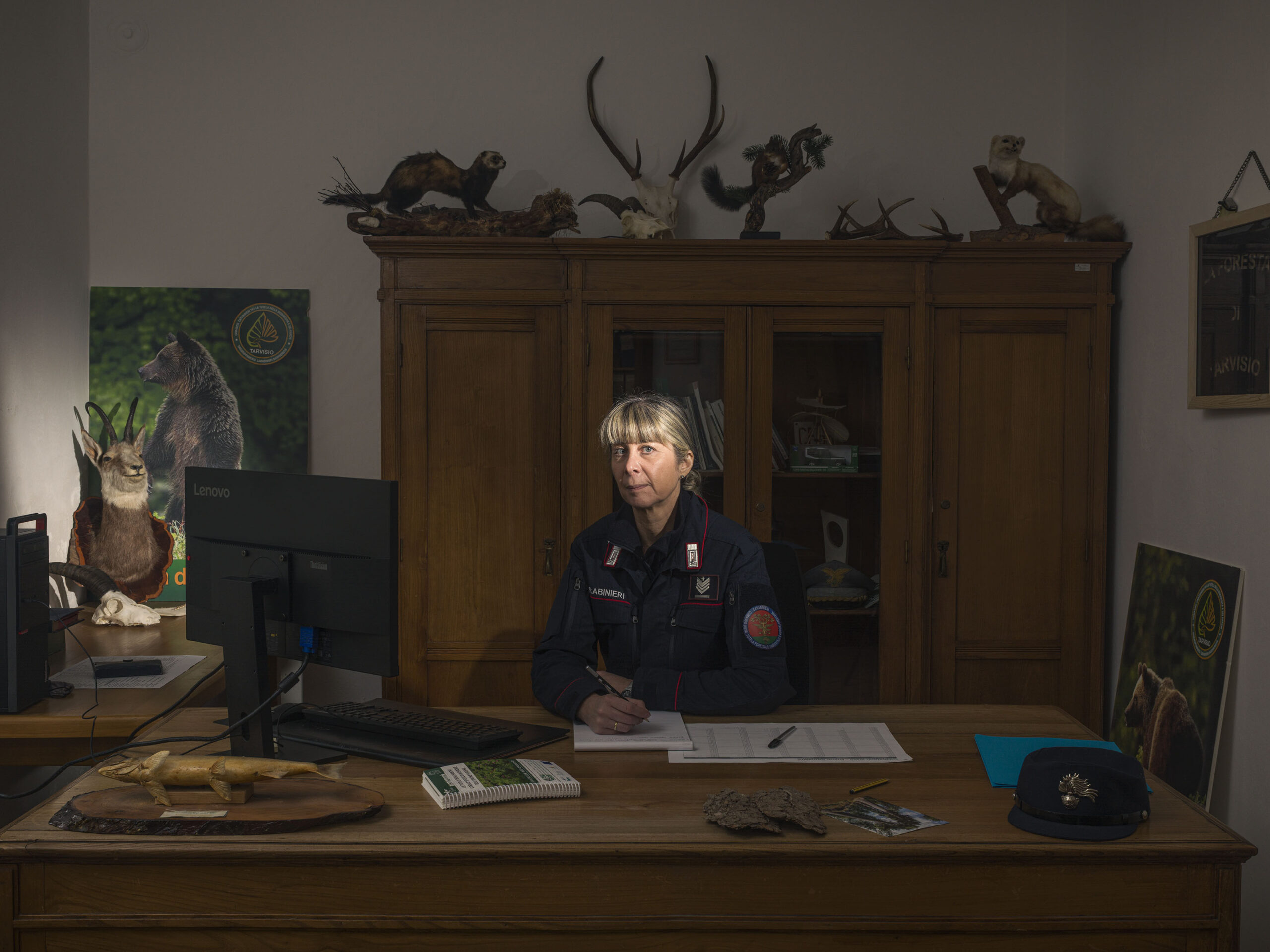
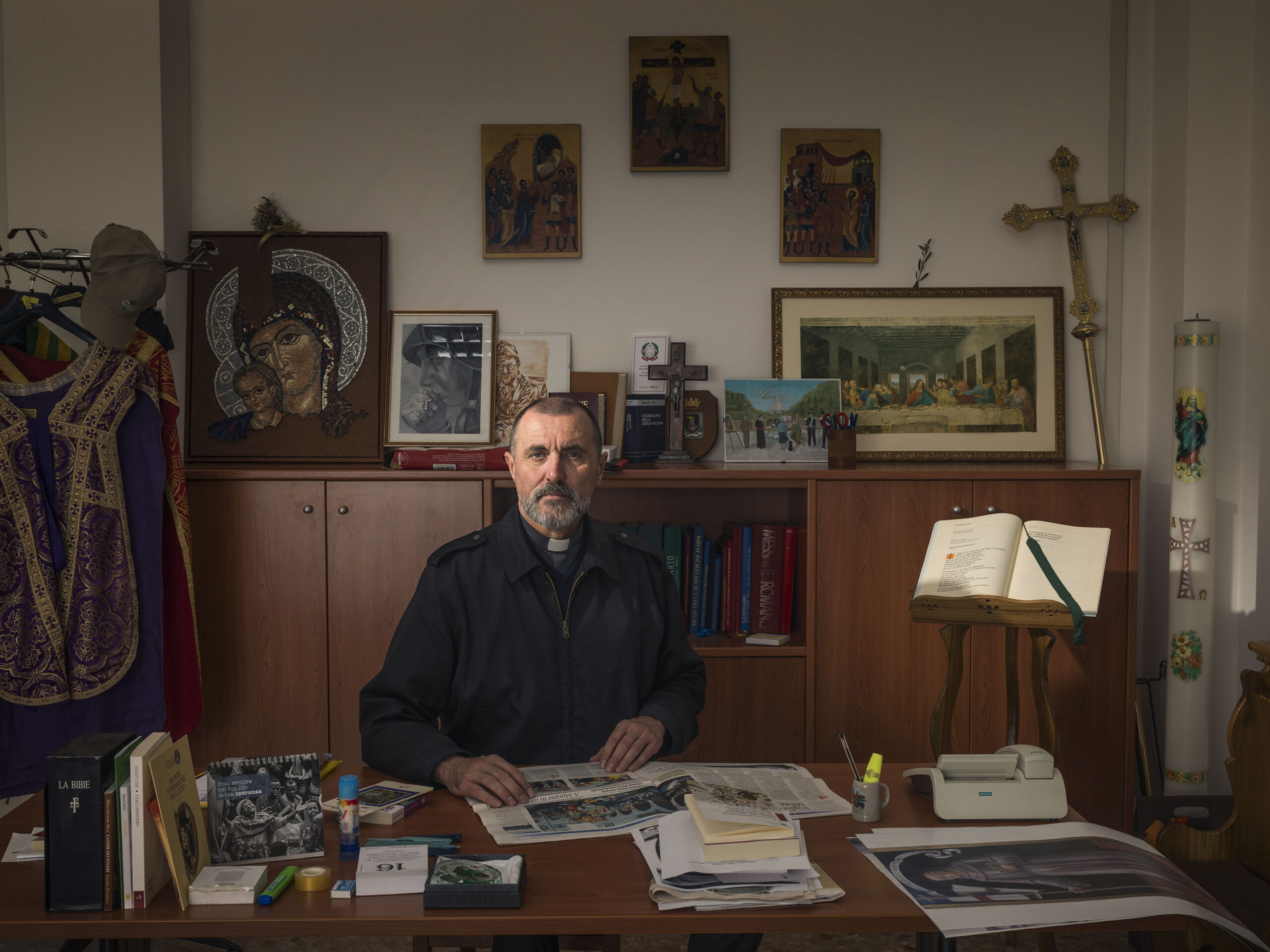
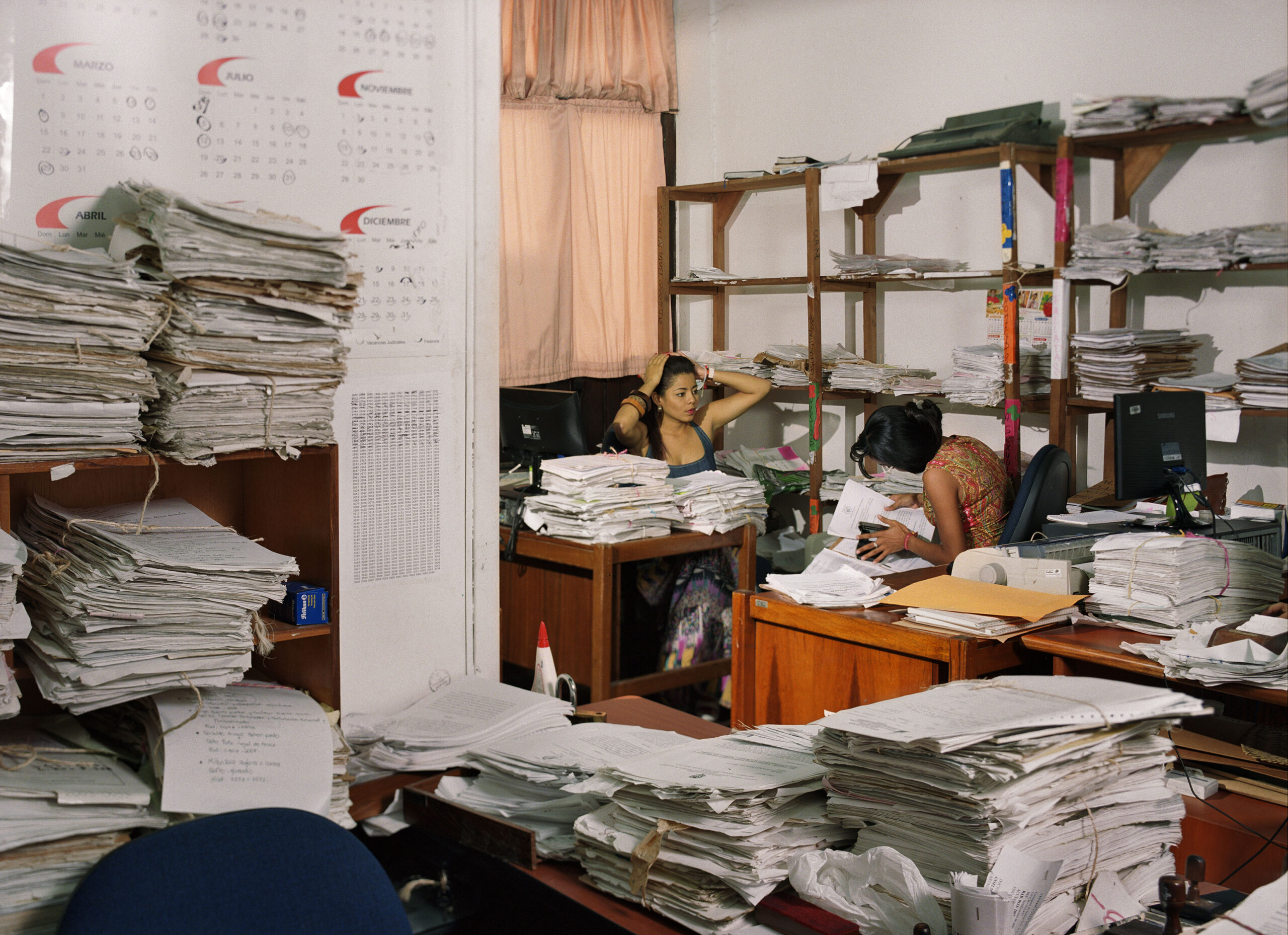
Bureaucratics is a comparative photographic study of the culture and symbols of bureaucracy, originally in eight countries across five continents. In this new edition, titled Bureaucratics Revisited, the number of countries has been extended to twelve. For writer Will Tinnemans and me, bureaucracy refers to those unelected, appointed officials of the executive branch tasked with implementing laws and other government policies – including police officers. In Wirtschaft und Gesellschaft (Economy and Society, 1922), renowned sociologist Max Weber describes the bureaucratic apparatus as a rationalized system of administration, characterized by hierarchy, formal rules and an impersonal approach. He argues that bureaucracies should treat citizens impartially to ensure fairness and equality. But he also notes that this same impersonality confronts citizens with objective criteria, protocols and procedures, and that this can lead to rigidity, dehumanization and alienation. This bureaucratic rationalization can easily result in failure to take individual needs into account.
Civil service offices are, on the one hand, display windows of the state: places where the government presents itself to its citizens, using symbols and paraphernalia that express the authority and legitimacy of the state and the associated political system: items such as files; desks behind which officials appear pinned down; framed portraits, certificates and other images that emphasize the officials’ relationship to the state. On the other hand, however, these offices are also a kind of individual or communal living space for those who spend a significant portion of their time in them – working or not. We immediately ruled out countries where citizens were received only at impersonal counters.
The original book Bureaucratics was edited by British photographer Martin Parr, published in 2008 by Nazraeli, and had four print runs – all sold out long ago. It contained 50 photos from eight countries, made between 2003 and 2007. Tinnemans and I originally selected eight countries on five continents based on political, historical, and cultural considerations. Each country chosen had to refer to a broader concept: the world’s most populous democracy (India); the decaying, the present and the upcoming great power (Russia, the USA and China); the South American country with the highest percentage of indigenous people (Bolivia): an African country with a past of civil war; a Middle Eastern country with a weak separation of state and religion (Yemen); and finally France, for its huge influence on the organization of the state and its bureaucracy.


![India-17/2003 [Pat., SP (b. 1962)] Sushma Prasad is an assistant clerk in the Cabinet Secretary’s office of the State of Bihar (population 83 million) at The Old Secretariat in the state capital, Patna. She was hired “on compassionate grounds” following the death of her husband, who worked in the same department until 1997. Her monthly salary is 5,000 rupees (about US$110 or €100).](https://janbanning.com/wp-content/uploads/2022/08/India-Bureau-17-Prasad-slide-home-1-scaled.jpg)
![India-15/2003 [Pat., SP (b. 1947)] Suresh Prasad is an assistant clerk in the 'Bihar House' department at The Old Secretariat, Patna, State of Bihar. His monthly salary is 9,000 rupees (about US$197 or €179).](https://janbanning.com/wp-content/uploads/2022/12/India-Bureau-15-BiharHouse-1800.jpg)
![India-23/2003 [Kis., ZA (b. 1953)] Zahir Anwar is a dealing assistant (in charge of day-to-day operations) at the Drivers’ Licenses Office in Kishanganj district, State of Bihar. He is a third-grade employee of the state government. His monthly salary is 9,000 rupees (about US$197 or €179).](https://janbanning.com/wp-content/uploads/2022/11/India-Bureau-23-DrivLic-1800.jpg)
![ndia-21/2003 [Tha., MD (b. 1960)] Dr. Munni Das is Block Development Officer in Thakurganj block, an administrative unit within Kishanganj district, State of Bihar. Her monthly salary is about 10,000 rupees (about US$220 or €200).](https://janbanning.com/wp-content/uploads/2022/12/India-Bureau-21-BDO3-1800.jpg)
![India-28/2003 [Mak., OP (b. 1963)] Om Prakash is Block Development Officer (BDO) in Makhdumpur Block, Jahanabad District, State of Bihar. His monthly salary is about 12,000 rupees (about €240).](https://janbanning.com/wp-content/uploads/2022/11/India-Bureau-28-BDO02-1800.jpg)
![India-22/2003 [Kis., AK (b. 1948)] Arbind Kumar is head assistant in the supply section of Food Supplies in Kishanganj district, State of Bihar. His monthly salary is 7,000 rupees (about US$153 or €139).](https://janbanning.com/wp-content/uploads/2022/12/India-Bureau-22-Supply-1800.jpg)
![India-19/2003 [Tha., SKM (b. 1946)] Surinder Kumar Mandal is a circle inspector of taxes in Thakurganj block, responsible for collecting taxes in part of Kishanganj district, State of Bihar. His monthly salary is 9,500 rupees (about US$208 or €189).](https://janbanning.com/wp-content/uploads/2022/12/India-Bureau-19-Tax01-1800.jpg)
![India-29/2003 [The., HDP (b. 1947)] Harsh Deo Prasad is panchayat chief (village head) in the village of Tehta, Makhdumpur block, Jahanabad district, State of Bihar. He advises local farmers on fertilizers, irrigation, and other ways to improve agricultural efficiency. His monthly salary is 9,100 rupees (about US$199 or €181).](https://janbanning.com/wp-content/uploads/2022/11/India-Bureau-29-Sevak-1800.jpg)
![India-P02/2003 [Tha., JH (b. 1956)]
Seated is Jawed Hayat, a literate constable in Thakurganj, Kishanganj district. Standing are three regular constables.](https://janbanning.com/wp-content/uploads/2022/07/India-Bureau-P02.jpg)
![India-24/2003 [Kis., AD (b. 1972)]
Anita Devi is assistant to the District Manager of Kishanganj district. She was hired “on compassionate grounds” after the death of her husband in 1992. Monthly salary: 6,000 rupees (about US$132 or €120).](https://janbanning.com/wp-content/uploads/2022/07/India-AssDM-LR-2025-kopie.jpg)
![Bolivia-13/2005 [Bet., RVF (b. 1958)] Rodolfo Villca Flores is the chief supervisor of market and sanitary services for the municipality of Betanzos, Cornelio Saavedra Province. He previously worked as a bricklayer, electrician, plumber, and handyman. His monthly salary is 1,150 bolivianos (about US$143 or €128).](https://janbanning.com/wp-content/uploads/2023/01/Boliv-Bureau-13.jpg)
![Bolivia-09/2005 [Bet., MCC (b. 1951)] Mario Calizaya Cóndor is the deputy mayor of Betanzos, Cornelio Saavedra Province. He completed only elementary school and later worked as a farmer. His monthly salary is 1,200 bolivianos (about US$149 or €133).](https://janbanning.com/wp-content/uploads/2023/01/Boliv-Bureau-09.jpg)
![Bolivia-05/2005 [Yoc., IQL (b. 1978)] Iván Quispe López is the only policeman in the village of Yocalla (population about 8,000). He has no means of transport and does everything on foot. He also has no telephone – he must use a public phone outside his office. His monthly salary is 900 bolivianos (about €100 or US$113).](https://janbanning.com/wp-content/uploads/2023/01/Boliv-Bureau-05.jpg)
![Bolivia-08/2005 [Tin., CAC (b. 1950)] Constantino Ayaviri Castro, formerly a construction worker, is a third-class police officer in the municipality of Tinguipaya, Tomás Frías Province. The police station has no phone, car, or typewriter. His monthly salary is 800 bolivianos (about US$100 or €89).](https://janbanning.com/wp-content/uploads/2023/01/Boliv-Bureau-08.jpg)
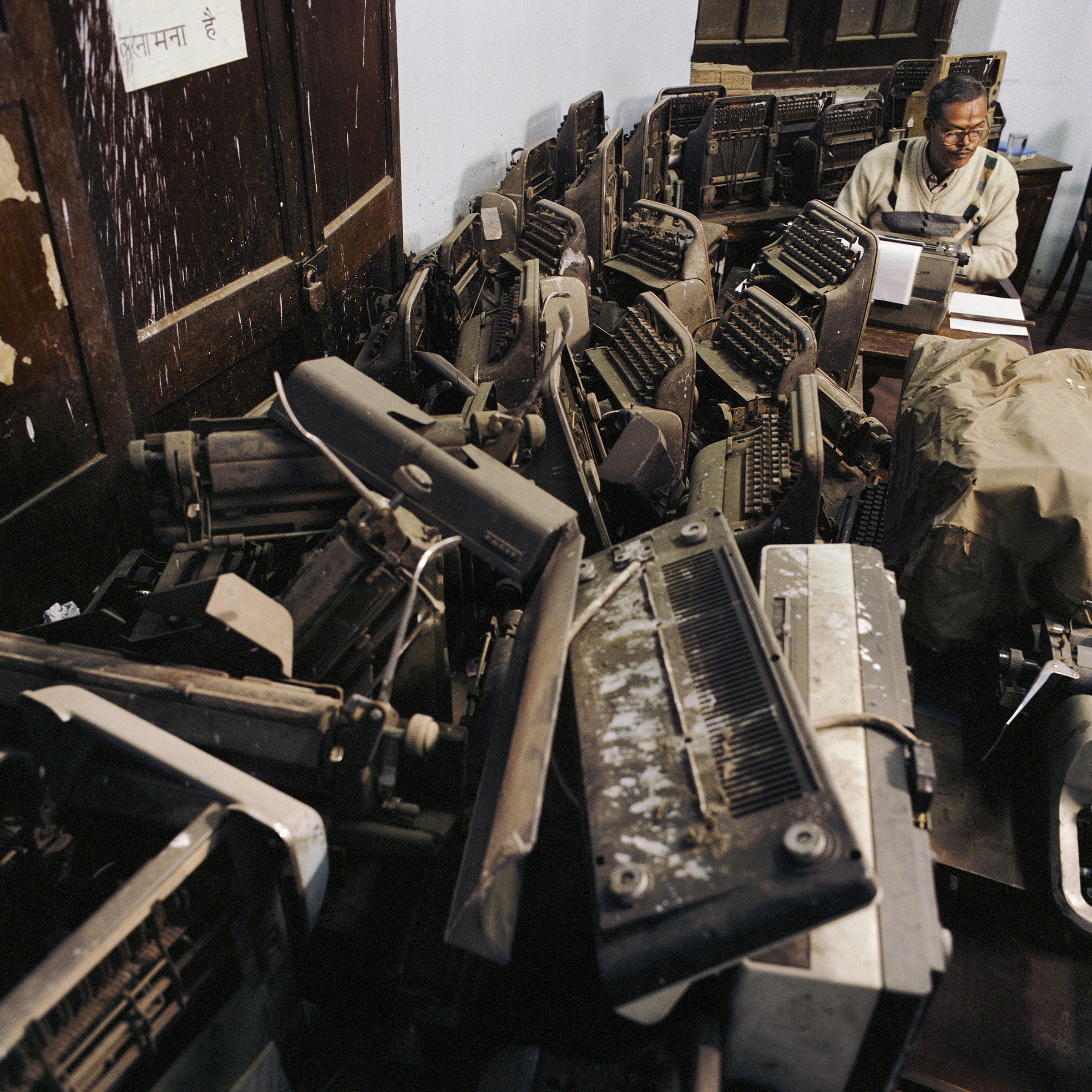
![Bolivia-17/2005 [Pot., MAC (b. 1982)] Marlene Abigahit Choque is a detective in the Homicide Department of the Potosí police. The department has only broken typewriters—no computers, no copy machine, not even a telephone. It shares a car with the Vice Squad. “If there’s no petrol in the car, we have to buy it with our own money. If the car’s gone, we take the bus. We have to pay for the tickets ourselves.” Monthly salary: 920 bolivianos (about US$114 or €102).](https://janbanning.com/wp-content/uploads/2023/01/Boliv-Bureau-17.jpg)
![Bolivia-22/2005 [Pot., DRC (b. 1972)] David Ruiz Doro is the chief of urban and environmental projects in the Technical Division of the Department of Public Works of the municipality of Potosí, the capital of the department of the same name. His monthly salary is 2,400 bolivianos (about US$299 or €267).](https://janbanning.com/wp-content/uploads/2023/01/Boliv-Bureau-22.jpg)
![Bolivia-24/2005 [Uyu., PCV (b. 1940)] Palmira Cádiz Velázquez is a librarian in the municipality of Uyuni, Antonio Quijarro Province. She works to supplement her husband’s pension of 1,000 bolivianos (about US$124 or €111). Her monthly salary is uncertain; she has just started her job and has not yet received a paycheck but expects to earn approximately 400 bolivianos (about US$50 or €44).](https://janbanning.com/wp-content/uploads/2023/01/Boliv-Bureau-24.jpg)
![Bolivia-25/2005 [Mil., MCR (b. 1942)] Marcial Castro Revollo is a shopkeeper and – at the desk in the back – a civil servant for the Registry of Births, Deaths, and Marriages in the municipality of Betanzos, Cornelio Saavedra Province. Also – at the desk in the front – he serves as the officer in charge of the polling station of the Corte Departamental Electoral de Potosí. His monthly salary is 500 bolivianos (about US$62 or €55).](https://janbanning.com/wp-content/uploads/2023/01/Boliv-Bureau-25.jpg)
![France-16/2006 [Cle., RV (b. 1957)] Roger Vacher is a narcotics agent with the national police force in Clermont-Ferrand, Puy-de-Dôme department, Auvergne region. His monthly salary is €2,200 (about US$2,893).](https://janbanning.com/wp-content/uploads/2022/11/France-Bureau-16-1800.jpg)
![France-B03/2007 [Amb., LM (b. 1965)] Laurence Maillard works seven hours per week as town clerk in Ambrief (population 72), in the Aisne department, Picardie region. She holds the same position in another nearby village, working a total of 19 hours per week. Her monthly salary is €500 (about US$657).](https://janbanning.com/wp-content/uploads/2022/11/France-Bureau-B03-7-scaled.jpg)
![France-B04/2007 [Anc., PH (b. 1952)] Pascale Hoornaert works eight hours per week as town clerk in Ancienville (population 78), in the Aisne department, Picardie region. She holds the same position in two other nearby villages, working a total of 31 hours per week. Her monthly salary is €1,025 (about US$1,348).](https://janbanning.com/wp-content/uploads/2022/11/France-Bureau-B04-1800.jpg)
![rance-05/2006 [Cle., MW (b. 1949) / LK (b. 1989)] Maurice Winterstein works in Clermont-Ferrand for the Commission for the Advancement of Equal Opportunity and Citizenship, at the combined administrative offices of the Auvergne region and the Puy-de-Dôme department. He is also in charge of the portfolio of religious affairs—Islam in particular. His monthly salary is €1,550 (about US$2,038). The young woman next to him is Linda Khettabi (b. 1989), an intern training to become a secretary.](https://janbanning.com/wp-content/uploads/2022/11/France-Bureau-05-1800.jpg)
![France-B05/2007 [Vas., AL (b. 1974)] Angélique Lambert works six hours per week as town clerk in Vassogne (population 51), in the Aisne department, Picardie region. She holds the same position in three other nearby villages, working a total of 35 hours per week. Her monthly salary is €1,200 (about US$1,578).](https://janbanning.com/wp-content/uploads/2022/11/France-Bureau-B05-1800.jpg)
![Yemen-03/2006 [Man., NAG (b. 1969)] Nadja Ali Gayt is an adviser at the Ministry of Agriculture’s education center for rural women in the district of Manakhah, Sana’a Governorate. Her monthly salary is 28,500 rial (about US$160 or €110).](https://janbanning.com/wp-content/uploads/2022/11/Yemen-Bureau-03-1800.jpg)
![Yemen-28/2006 [Shi., MHA (b. 1962)] Mohammed Hamid Azein collects the monthly water bills in the district of Shibam, Al-Mahwit Governorate. His monthly salary is 21,600 rial (about US$121 or €83), but he has not received a salary for five months.](https://janbanning.com/wp-content/uploads/2022/11/Yemen-Bureau-28-1800.jpg)
![Yemen-14/2006 [Tai., AAS (b. 1964)] Ali Abdulmalik Shuga is responsible for the archives of the Ministry of Trade and Commerce’s governorate office in the city of Ta’izz, Ta’izz Governorate. His monthly salary is 30,500 rial (about US$171 or €117).](https://janbanning.com/wp-content/uploads/2022/11/Yemen-Bureau-14-1800.jpg)
![Yemen-16/2006 [Dhi., AA (b. 1955)] Abdulwali Azablani is head of the district of Dhi Sufal, Ibb Governorate. His monthly salary is 35,000 rial (about US$196 or €135).](https://janbanning.com/wp-content/uploads/2022/11/Yemen-Bureau-16-1800.jpg)
![Yemen-17/2006 [Dhi., AHM (b. 1962)] Abdullah Hussein Mohammed Al-Harazi is a manager at the planning and infrastructure department of the district of Dhi Sufal, Ibb Governorate. His monthly salary is 32,000 rial (about US$179 or €123).](https://janbanning.com/wp-content/uploads/2022/11/Yemen-Bureau-17-1800.jpg)
![Yemen-28/2006 [Shi., MHA (b. 1962)] Mohammed Hamid Azein collects the monthly water bills in the district of Shibam, Al-Mahwit Governorate. His monthly salary is 21,600 rial (about US$121 or €83), but he has not received a salary for five months.](https://janbanning.com/wp-content/uploads/2022/11/Yemen-Bureau-30-1800.jpg)
![Yemen-32/2006 [AtT., MSA (b. 1950)] Mohammed Mohammed Shams Adeen (b. circa 1950) is the manager of the garbage collection service in At-Tawilah, Al-Mahweet Governorate. The service operates with two trash trucks and several handcarts. Waste is dumped and burned in the mountains outside the city. Monthly salary: 29,000 Yemeni rials (about US$163, €112).](https://janbanning.com/wp-content/uploads/2022/11/Yemen-Bureau-32-1800.jpg)
![Yemen-35/2006 [AIM., AAN (b. 1982)] Alham Abdulwaze Nuzeli works at the regional office of the Ministry of Tithing and Alms in the city of Al-Mahwit, Al-Mahwit Governorate. Her monthly salary is 12,000 rial (about US$67 or €46).](https://janbanning.com/wp-content/uploads/2022/11/Yemen-Bureau-35-1800.jpg)
![Russia-25/2004 [Tom., LVM (b. 1959)] Lyudmila Vasilyevna Malkova is a secretary to the mayor of the city of Tomsk, Tomsk province. She and her colleague take turns, working every other day, seven days a week, at least 12 hours per day. Her monthly salary is 10,500 rubles (about US$375 or €285).](https://janbanning.com/wp-content/uploads/2022/11/Siberia-Bureau25-1410-1800.jpg)
![Russia-23/2004 [Okt., SMO (b. 1974)] Sergej Michailovich Osipchuk is the lone police officer in the village of Oktyabrsky, Tomsk province. He has no police car, no private vehicle, and not even a bicycle. He does not wish to disclose his salary, but informed sources estimate the monthly salary of an officer of his rank and age at approximately 4,000 rubles (about US$143 or €108).](https://janbanning.com/wp-content/uploads/2022/11/Siberia-Bureau23-1309-1800.jpg)
![Russia-24/2004 [Ale., NIV (b. 1954)] Nikolajevich Ilyich Volkov is the administrator of the village of Alexandrovskoye, Tomsk province. His monthly salary is 9,000 rubles (about US$321 or €243).](https://janbanning.com/wp-content/uploads/2022/11/Siberia-Bureau24-1311-1800.jpg)
![Russia-28/2004 [Bat., NRP (b. 1949)] Nikolaj Romanovitsj Panfjorov is governor of Batkat, a village with 1,220 residents in Batkat district, Tomsk province. His monthly salary is “12 times the minimum wage and sometimes a little extra for overtime,” which amounts to approximately 7,200 rubles (US$ 258 or €195).](https://janbanning.com/wp-content/uploads/2022/11/Siberia-Bureau-28-1800.jpg)
![Russia-19/2004 [Tom., MNB (b. 1962)] Marina Nikolayevna Berezina, a former singer and choir director, is now the secretary to the head of the financial department of Tomsk province’s Facility Services. She does not wish to reveal her monthly salary.](https://janbanning.com/wp-content/uploads/2022/11/Siberia-Bureau19-1008-1800.jpg)
![Russia-29/2004 [She., YLB (b. 1976)] Yevgeny Leonidovich Bill is the lone police officer in the Shegarsky territory, Tomsk province. He is still studying at the police academy in Novosibirsk. Bill has no phone and moves around on foot within a ten-werst radius around his station (one werst equals 0.66 mile). His monthly salary is 6,000 rubles (about US$214 or €162).](https://janbanning.com/wp-content/uploads/2022/11/Siberia-Bureau29-1911-1800.jpg)
![Liberia-04/2006 [Mon., AD (b. 1940)] Major Adolph Dalaney works in the Reconstruction Room of the Traffic Police at the Liberia National Police Headquarters in Monrovia. His monthly salary is barely 1,000 Liberian dollars (about US$18 or €17). Traffic accident victims sometimes pay extra if Dalaney’s department quickly prepares a favorable report for a judge.](https://janbanning.com/wp-content/uploads/2022/11/Liber-Bureau-04-1800.jpg)
![Liberia-12/2006 [Gra., ACG (b. 1950)] Alfred C. Garley, stationed in Zwedru, is deputy revenue agent for Grand Gedeh County. During the Liberian civil war, the tax office was robbed and destroyed. His monthly salary is approximately 1,000 Liberian dollars (about US$18 or €17).](https://janbanning.com/wp-content/uploads/2022/11/Liber-Bureau-12-1800.jpg)
![Liberia-19/2006 [Nye., WW (b.1963)] Warford Weadatu Sr., a former farmer and mail carrier, now serves as county commissioner (administrator) for Nyenawliken district, River Gee County. He has no budget and is not expecting any money soon from the impoverished authorities in Monrovia. His monthly salary is 1,110 Liberian dollars (about US$20 or €19), but he had not received any pay for the previous year.](https://janbanning.com/wp-content/uploads/2022/11/Liber-Bureau-19-1800.jpg)
![Liberia-29/2006 [Car., ADT (b. 1946)] Alfred D. Tartea is administrative assistant and acting superintendent (the highest civil servant) of Careysburg district, Montserrado County. His monthly salary is 750 Liberian dollars (about US$13 or €12.50).](https://janbanning.com/wp-content/uploads/2022/11/Liber-Bureau-29-1800.jpg)
![Liberia-32/2006 [Kak., SPSK (b. 1955)] Lieutenant Samuel P.S. Kollie is chief of the Traffic Station of the Liberia National Police in Kakata, Margibi County. He has no police car and no means of communication. When an accident is reported, Kollie sometimes takes a cab at the expense of the person reporting the incident. His monthly salary is 900 Liberian dollars (about US$16 or €15).](https://janbanning.com/wp-content/uploads/2022/11/Liber-Bureau-32-1800.jpg)
![Liberia-35/2006 [Sme., BFN (b. 1962)] Brama F. Nyé is head of the Revenue Office in Smell-no-Taste, Margibi County. Once a month, he drives a rented or borrowed car to Monrovia to deliver hundreds of thousands of Liberian and American dollars to the Central Bank of Liberia. His monthly salary is 1,080 Liberian dollars (about US$19 or €18).](https://janbanning.com/wp-content/uploads/2022/11/Liber-Bureau-35-1800.jpg)
![Liberia-38/2006 [Mon., LNS (b. 1964)] Louise N. Smith keeps files at the Department of Statistics of the Bureau for Immigration and Naturalization (BIN) in Monrovia. Her monthly salary is 1,000 Liberian dollars (about US$18 or €17), nearly all of which goes to transportation costs. Sometimes she receives no pay for three months, relying instead on help from family in the United States.](https://janbanning.com/wp-content/uploads/2022/11/Liber-Bureau-38-1800.jpg)
![Mozambique – 02/2002 [Boi., CR]
Carlos Roska is secretário do posto administrativo (Administrative Secretary) of Boila-Nametoria, with 3,857 inhabitants (2001), in Nampula Province.](https://janbanning.com/wp-content/uploads/2023/01/0-Mozambique-Bureaucr-02.jpg)
![Mozambique – 05/2002 [Map., DX]
Duarte Xavier is comandante da 1ª esquadra (Adjunct Superintendent) of the police in the capital, Maputo. He commands around 100 officers (the exact number is “a secret”).](https://janbanning.com/wp-content/uploads/2023/01/1-Mozambique-Bureaucr-05.jpg)
![Mozambique – 01/2002 [Nam., ARN]
Abdul Razak Noormahomed is the Governor of Nampula Province, with approximately 3.5 million inhabitants (2001).](https://janbanning.com/wp-content/uploads/2023/01/Mozambique-Bureaucr-01.jpg)
![Mozambique – 03/2002 [Nai., CVE]
Crisanto Vicente Estêvão Mpila is chefe do posto administrativo (Head of the local administrative office) of the municipality of Namialo, with 37,316 inhabitants (2001), in Nampula Province.](https://janbanning.com/wp-content/uploads/2023/01/Mozambique-Bureaucr-03.jpg)
![Mozambique – 06/2002 [Nac., JS]
João Sarinha is chefe do posto administrativo (Head of the local administrative office) of the municipality of Nacavale, with 20,592 inhabitants (2001), in Nampula Province.](https://janbanning.com/wp-content/uploads/2023/01/Mozambique-Bureaucr-06.jpg)
![USA-18/2007 [Pal., RF (b. 1963)] Rudy Flores is one of 118 Texas Rangers—state law enforcement officers—who cover 254 counties between them. He is based in Palestine, Anderson County, Texas, and is responsible for three counties. His monthly salary is US$5,000 (€3,720).](https://janbanning.com/wp-content/uploads/2022/11/USA-Bureau-18-1800.jpg)
![USA-11/2007 [Ozo., SF (b. 1961)] Shane Fenton is sheriff of Crockett County, Texas, based in Ozona, the county seat. His monthly salary is US$ 3,166 (€ 2,355).](https://janbanning.com/wp-content/uploads/2022/11/USA-Bureau-11-1800.jpg)
![USA-01/2007 [Roc., TH (b. 1949)] Thomas Harris is chief of police of the city of Rockdale, Milam County, Texas. His monthly salary is US$ 4,250 (€ 3,160).](https://janbanning.com/wp-content/uploads/2026/04/USA-Bureau-01.jpg)
![USA-04/2007 [Aus., DME (b. 1969)] Dede McEachern is director of licensing at the Texas Department of Licensing and Regulation, in the state capital, Austin. Her monthly salary is US$ 5,833 (€ 4,240).](https://janbanning.com/wp-content/uploads/2022/11/USA-Bureau-04B-1800.jpg)
![USA-12/2007 [Ozo., NH (b. 1942)] Nancy Hale is deputy treasurer of Crockett County, Texas, based in Ozona, the county seat. Her monthly salary is US$ 2,417 (€ 1,800).](https://janbanning.com/wp-content/uploads/2022/11/USA-Bureau-12-1800.jpg)
![USA-35/2007 [Woo., JW (b. 1952)] Jessie Wolf, a former professional football player for the Miami Dolphins, is now sheriff of Tyler County, Texas, based in Woodville, the county seat. His monthly salary is US$ 3,417 (€ 2,540).](https://janbanning.com/wp-content/uploads/2022/11/USA-Bureau-35-1800.jpg)
![USA-24/2007 [Lin., SC (b. 1971)] Shannon Crenshaw is deputy clerk at the county clerk’s office in Linden, Cass County, Texas. Her monthly salary is US$ 1,750 (€ 1,300).](https://janbanning.com/wp-content/uploads/2022/11/USA-Bureau-24-2-1800.jpg)
![USA-37/2007 [Hou., MS (b. 1951)]
Marty Stein is council agenda director for the city of Houston (population over 2 million), Texas. Monthly salary: US$7,700 (€ 5730).](https://janbanning.com/wp-content/uploads/2026/04/USA-Bureau-37.jpg)
![China-06/2007 [Jin., QSF (b. 1964)]
Qu Shao Feng is chief general of Jining Public Security Bureau’s Division of Aliens and Exit-Entry Administration in Jining City, Shandong province. Monthly salary: 3,100 renminbi (US$384 or €286).](https://janbanning.com/wp-content/uploads/2022/11/China-Bureau-06-1800.jpg)
![China-22/2007 [Tie., ZMG (b. 1966)]
Zhang Mao Guo, employed by the Office of Justice, is an official teacher of Justice and Values to villagers in Tianping Town, Daiyue District, Tai’an City, Shandong province. Monthly salary: 1,500 renminbi (US$186 or €138).](https://janbanning.com/wp-content/uploads/2022/11/China-Bureau-22-1800.jpg)
![China-09/2007 [GuL., WN (b. 1983)]
Wang Ning is advisor at the Office of Economic Affairs of Gu Lou, a neighborhood in the city of Yanzhou, Jining prefecture, Shandong province. Monthly salary: 2,100 renminbi (US$307 or €228).](https://janbanning.com/wp-content/uploads/2022/11/China-Bureau-09-1800.jpg)
![China-10/2007 [Cui, CW (b. 1943)/CG (b. 1969)]
Cui Weihang (left) is village chief of Cui, and Cui Gongli (right) is party secretary of the Chinese Communist Party in Cui (population 2,300), which is in Tuanli Town, Jiaxiang County, a part of Jining City, Shandong province. Monthly salary for the village chief: no payment. Monthly salary for the party secretary: 280 renminbi (US$35 or €26).](https://janbanning.com/wp-content/uploads/2022/11/China-Bureau-10-1800.jpg)
![China-19/2007 [Tai., GSW (b. 1987)]
Guo Shao Wei is doorman at the Tai’an Hi-Tech Zone and Economic Zone Building, Tai’an City, Shandong province. Monthly salary: 1,100 renminbi (US$136 or €101).](https://janbanning.com/wp-content/uploads/2022/11/China-Bureau-19-1800.jpg)
![China-23/2007 [Tai., JJY (b. 1958)]
Jiang Ji Yuan is chairman of the Art and Literature Association of Tai’an, Tai’an City, Shandong province. Monthly salary: 4,000 renminbi (US$496 or €368).](https://janbanning.com/wp-content/uploads/2022/11/China-Bureau-23-1800.jpg)